Inside Panels

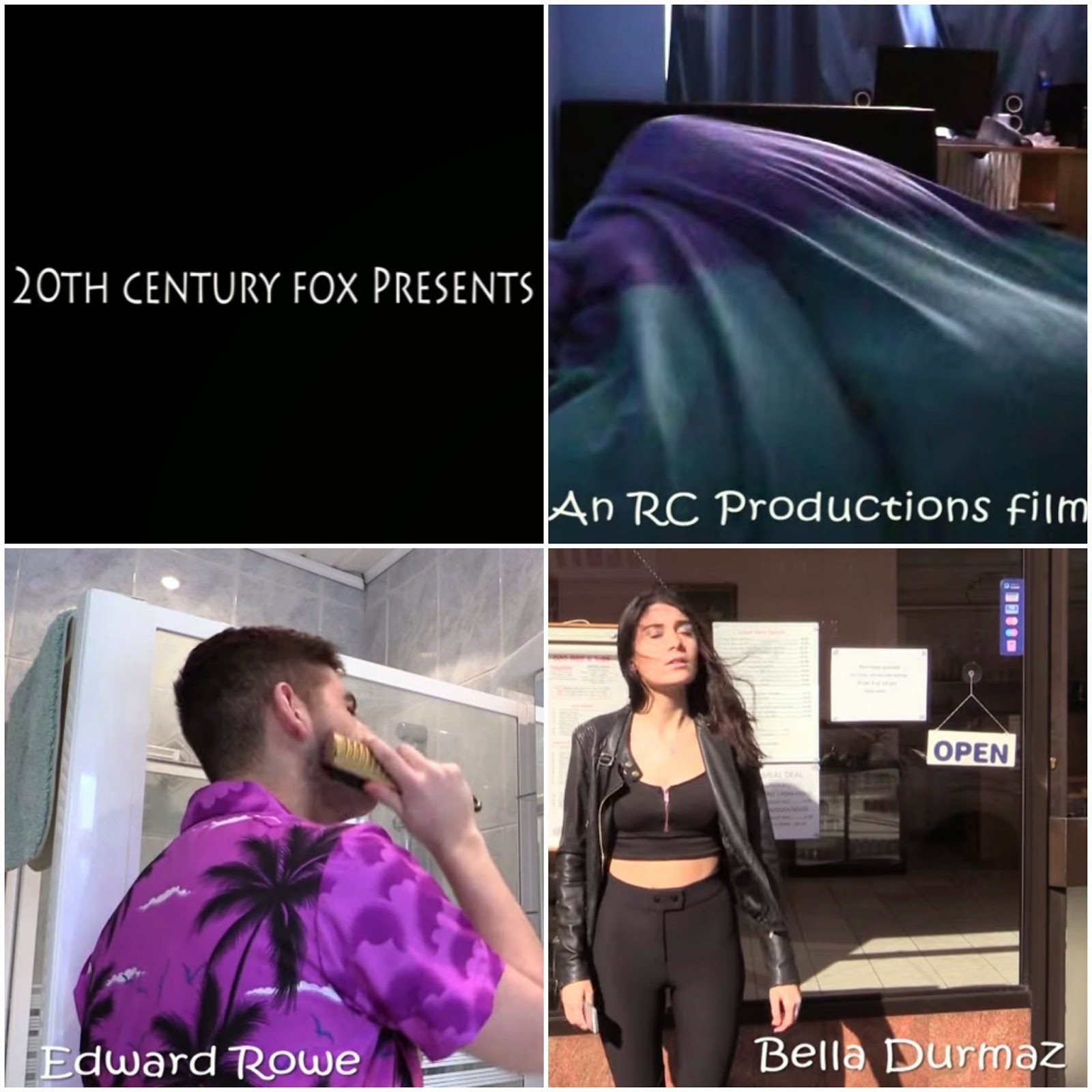
Our Digipack, top left - back, top right - front, bottom left - inside panel, bottom right - inside panel (CD)

Wednesday, 1 April 2015

Sunday, 22 March 2015
Question 1: In what ways does your media product use, develop or challenge forms and conventions of real media products?
 |
| Our character Guy getting ready for his first date |
The Life Of Guy is a rom-com film which follows the life of a university student called Guy. The film is set in a flashback as the character looks back at how he used to be and reflects on how much his life has changed. It starts of with him looking back at his first date fail and then the heartbreak that followed which led to him sitting in his room 24 hours a day. He then meets a girl called Lindy who soon becomes his best friend. She guides him through life and teaches him how to get girls, how to be popular and how to interact with people in a normal manner. After a while of this we now come out of the flashback and see him walking down the corridor with his girlfriend!
Form - the typical features of an opening sequence
Our opening sequence both conforms and challenges typical features of an opening sequence. Here is how:

Here is the full move of John Tucker Must Die. However, the opening sequence lasts until 3:40. If you watch up to there you can see the features.
Titles:
For titles our main inspiration again was John Tucker Must Die. They used a simple white font which faded in and out and most of them were overlayed. Similarly, in our film opening we used a simple white font which faded in and out and most of them were overlayed as well.
 |
| John Tucker Must Die Titles |
 |
| The Life Of Guy titles. |
Challenges to common stereotype:
- In our film opening the title of our film, The Life of Guy, appears at the end of the opening sequence rather than the the front. This is breaking the typical form of an opening sequence as majority of films introduce their film with its title right at the front.
Genre - Romantic Comedy
Challenges to common stereotypes:
- In romantic comedy's the main character who needs to be helped and ideally 'saved' is usually female but in our film we decided to make him male.
- The reason we did this is to challenge another stereotype that rom-com's are mainly targeted at females. We wanted our film to have equal appeal to both male and female characters and so we decided that our main character would be male.
Narrative Structure:
Most films follow Todorov's classic narrative pattern of equilibrium, disruption, resolution and new equilibrium. In the diagram below I show you how my film and another film called 22 Jump Street follows this theory:
 |
| Todorov's Theory 22 Jump Street The Life Of Guy |
- Flashback - our whole opening is a flashback which is shown through our voiceover as Guy is looking back on himself and reflecting back at what his life used to be like.
- Narrative Ellipsis - we cut out certain unneeded scenes such as him walking back to his room from the bathroom in order to speed up the action and the audience can fill in the gap themselves.
- Enigma Code - What will happen to Guy after? How will he handle the break up? Will his life ever change?
- Cross Cutting - We used cross cutting to show Guy running down the street and then cut to Bella waiting outside the take away place for him and then back to him running.
Style:
Lighting/Colour
 We wanted to create all the shots with high key, warm tone lighting as this is a typical genre convention of many rom-com films such as Legally Blode.
Lighting/Colour
We wanted to create all the shots with high key, warm tone lighting as this is a typical genre convention of many rom-com films such as Legally Blode.  |
| Legally Blonde Lighting |
 |
| Legally Blonde Lighting |
 |
| Legally Blonde Lighting |
In order to get the intended colours that we wanted on our film we had to use the grading technique on Adobe Premiere Pro which allowed us to change the lighting to suit our needs. However, since we filmed using spotlights and natural lighting, not much grading was needed.
Here, I have shown some scenes from the film Legally Blonde where they use high key, warm toned lighting similar to the ones we used in our opening sequence.
Here, I have shown some scenes from the film Legally Blonde where they use high key, warm toned lighting similar to the ones we used in our opening sequence.
Soundtrack and dialogue
Many films of the rom-com genre use really happy upbeat music for their opening sequence as this sets the atmosphere for the rest of the film as although there may be serious underlying themes, the lighthearted take on it will make it quite entertaining and happy. We used a soundtrack called 'Life of Riley' as this fit in with our genre and set quite a happy tone for the film. Here is the soundtrack that we used:
The sountrack for a similar film called 'The Other Woman' is quite similar with quite an old song being used to describe a baby with words like 'beautiful' and 'happy'. Our soundtrack however, does not include vocals.
For the dialogue in opening sequences, most films have either a voiceover, dialogue or just the music with quiet action on screen. However, our film challenges that stereotype as we have mixed voiceover and dialogue together. We feel that for our film this works best as it is a flashback sequence as he remembers who he used to be. A real film which also challenges this stereotype is 'John Tucker Must Die' as the opening sequence consists of both voiceover and dialogue as she is having a flashback as well near the beginning of the film.
Many films of the rom-com genre use really happy upbeat music for their opening sequence as this sets the atmosphere for the rest of the film as although there may be serious underlying themes, the lighthearted take on it will make it quite entertaining and happy. We used a soundtrack called 'Life of Riley' as this fit in with our genre and set quite a happy tone for the film. Here is the soundtrack that we used:
The sountrack for a similar film called 'The Other Woman' is quite similar with quite an old song being used to describe a baby with words like 'beautiful' and 'happy'. Our soundtrack however, does not include vocals.
For the dialogue in opening sequences, most films have either a voiceover, dialogue or just the music with quiet action on screen. However, our film challenges that stereotype as we have mixed voiceover and dialogue together. We feel that for our film this works best as it is a flashback sequence as he remembers who he used to be. A real film which also challenges this stereotype is 'John Tucker Must Die' as the opening sequence consists of both voiceover and dialogue as she is having a flashback as well near the beginning of the film.
Question 2: How does your media product represent particular social groups?
The main social group that we are trying to represent is the male gaming geeks/misfits who are socially awkward and do not fit into our perception of 'normal'.
Some typical representations of geeks/misfits in the media:


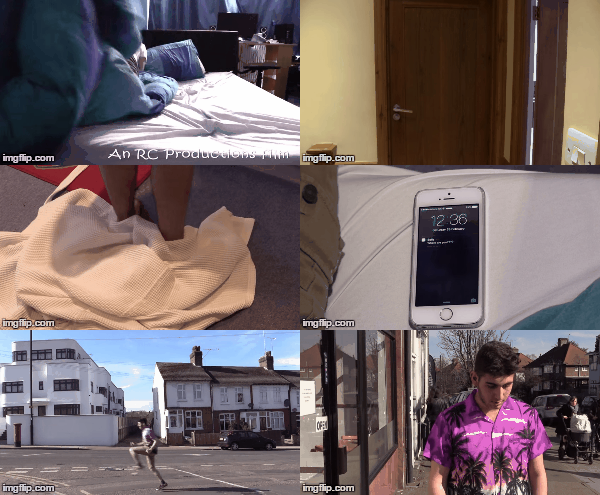 There are many comedic aspects to our geeky character Guy as even in the beginning of the film the rolls and falls out of bed instead of getting up like a normal person. He also turns on his shower too cold, mentions supergluing his hands together, picks the most ugliest outfit, turns up late to his first ever date and then offers to get a takeaway for them both. This will hopefully make the audience laugh as we have intentionally placed these shots in our opening sequence. It will help the audience identify with the character.
Some typical representations of geeks/misfits in the media:
- They tend to have a really bad fashion sense
- Usually really into games and anything that stimulates an intellectual response
- They aren't usually any good with girls
- They are usually portrayed as a comedy character put there to make the audience laugh
Examples in real media for 1:
 |
| Will from The Inbetweeners 2 movie. Analysis of his costume. |
Examples in our film:
Examples in real media for 2:
In the video above, an extract from Big Bang Theory, we see Sheldon Cooper invent a highly complicated game called 'Three Person Chess'. Not only is he an intense gamer who loves playing games he also goes as far as inventing his own game. This shows how smart he is and in a way is a positive representation of geeks as they have outstanding intellectual ability.
Examples in our film:
- We can see the stacks of games next to his TV which implies that he plays games on a regular basis
- There are many gaming posters on the wall which signifies his character and his hobbies, ie gaming
- He has headphones on and looks proper concentrated (on the other shot) which suggests he's quite an intense gamer
- We filmed this shot over his shoulder intentionally so that you could see all the posters, the games and him physically playing the game. This hopefully helps the audience figure out what kind of character he is.
Examples in real media for 3:
In this clip we see Amy be mad at Sheldon for not paying her any attention during their excursion on Valentine's day. To this Sheldon responds with a very awkward kiss. Even the audience feels awkward watching it.
Examples in our film:
In this scene we see Guy approach Bella and outstretch his hands for a handshake which people don't usually do anymore. People are usually greeted with hugs. He then says 'Oh I thought we'd get a take out'. This is his first date and he wants to get a take out! That's not usually what is considered a social norm for a first date. The guy usually organises a really nice date somewhere nice like a restaurant or do an activity together like watching a film. This tells us that he has minimal experience with girls and doesn't know how to behave around them. We deliberately made him like this so that the audience can feel sympathy towards Guy by the end of the opening sequence and see just how socially awkward he is.
Examples in real media of 4:
In this scene we see Will (the guy in the checkered shirt) dance really awkwardly around the girls whilst trying to copy the guy who can actually dance. This makes the audience laugh as it's a funny moment and the audience can see what a fool he is making of himself.
Examples in our film:
There are many comedic aspects to our geeky character Guy as even in the beginning of the film the rolls and falls out of bed instead of getting up like a normal person. He also turns on his shower too cold, mentions supergluing his hands together, picks the most ugliest outfit, turns up late to his first ever date and then offers to get a takeaway for them both. This will hopefully make the audience laugh as we have intentionally placed these shots in our opening sequence. It will help the audience identify with the character. Question 3: What kind of media institution might distribute your media product and why?
The distributor for our film is 20th Century Fox and the production company is RC Productions, short for Rom-com Productions.
20th Century Fox is an American film studio, which is horizontally and vertically integrated, distributor and one of the six major Hollywood studios. It is located in Los Angeles, just west of Beverly Hills. It has produced and distributed some majorly successful films like Avatar, Titanic and Die Hard.
Here is a case study of our distributor and films that they have distributed of the same genre:
We chose 20th Century Fox as our distribution company as they have also distributed a number of successful rom-com's as shown in the Prezi above. A particular film we drew inspiration from was 'John Tucker Must Die' and we looked at their distribution and decided we wanted to use the same company. Also, using 20th Century Fox will ensure that our product is appropriately placed and will reach our target audience.
Our release plan:
We drew inspiration from a film called 'What's your number?' as they used 20th Century Fox as their distributor but a smaller company for their production. Similarly, we used 20th Century Fox as our distributor and RC Productions for our production.

20th Century Fox is an American film studio, which is horizontally and vertically integrated, distributor and one of the six major Hollywood studios. It is located in Los Angeles, just west of Beverly Hills. It has produced and distributed some majorly successful films like Avatar, Titanic and Die Hard.
We chose 20th Century Fox as our distribution company as they have also distributed a number of successful rom-com's as shown in the Prezi above. A particular film we drew inspiration from was 'John Tucker Must Die' and we looked at their distribution and decided we wanted to use the same company. Also, using 20th Century Fox will ensure that our product is appropriately placed and will reach our target audience.
Our release plan:
- There will be a UK premiere at London's Leicester Square as it is a British production company
- There will also be a USA Premiere in Los Angeles as this film is being released globally and this will create a buzz just before the release
- Initial release will be in the summer around the end of July in the UK and USA as many people will be off on their summer holidays so there is an increased chance of them coming to see the film
- Then it will be a staggered release across the globe
- There will also be a DVD and Blu-Ray release once the film has been released in the last country
Our Production Company
We drew inspiration from a film called 'What's your number?' as they used 20th Century Fox as their distributor but a smaller company for their production. Similarly, we used 20th Century Fox as our distributor and RC Productions for our production.
Question 4: Who would be the audience for your media product?
The core target audience for our film was fans of rom-com films as this was our genre and we felt that we could appeal directly to this main target audience using our genre.
Our secondary target audience was teenagers and young adults from both genders aged between 15-24 as the narrative of the film is something a lot of young people can relate to and also it is set in a university campus.
Our tertiary audience would be British people as the film is set completely in Britain and has a fully British cast and production members.
Our secondary target audience was teenagers and young adults from both genders aged between 15-24 as the narrative of the film is something a lot of young people can relate to and also it is set in a university campus.
Our tertiary audience would be British people as the film is set completely in Britain and has a fully British cast and production members.
 |
| This graph shows that in the majority of years the main cinema-goers are always 15-24 year olds so we have a mass audience to target. Stats taken from Statista |
Question 5: How did you attract/address your audience?
We have tried to attract each different target audience in a very specific way and we have specifically made some decisions in order to directly target each group. Universally, I think our film style and the continuity editing would appeal to our audience as a whole as it creates a sense of realism and some people can even relate it. Here's how we targeted each group specifically:

How we used the uses and gratification theory to attract/address our audience:


Audience Feedback
I set up an online survey using SurveyMonkey to get our audience feedback and see what they thought of the overall opening sequence. I put the link up on my personal Facebook page and asked everyone to take part in the survey with a link to my opening sequence as well. Here are the results:
The first question was about age. This was to see who was actually interested enough by my opening sequence to actually open the survey and fill it out. As you can see there was a range of ages but the majority of them were under 18 (mainly 16/17) or 18-24 .


This question is asking the audience to rate the film out of 10. None of the scores went below 5 which I think is really good. It seems like the audience really enjoyed it.


Majority of these answers are referring to the voiceover as to what they disliked. When I spoke to some people about my opening sequence this was something they mentioned as well. One of my acquaintances told me that it was quite 'annoying' to have a voiceover and dialogue throughout as it detracted from the action and the comedic value of the shots.

This response really pleased me as 100% of everyone who answered this survey said they would want to carry on watching the film!

How we used the uses and gratification theory to attract/address our audience:
Audience Feedback
I set up an online survey using SurveyMonkey to get our audience feedback and see what they thought of the overall opening sequence. I put the link up on my personal Facebook page and asked everyone to take part in the survey with a link to my opening sequence as well. Here are the results:
The first question was about age. This was to see who was actually interested enough by my opening sequence to actually open the survey and fill it out. As you can see there was a range of ages but the majority of them were under 18 (mainly 16/17) or 18-24 .
The question after was about gender, again to determine who had actually taken part in the survey. Majority were female but if you look at the percentages it was pretty close so the male audience did like the opening sequence enough to fill out a survey about it.
This question is asking the audience to rate the film out of 10. None of the scores went below 5 which I think is really good. It seems like the audience really enjoyed it.
I have only included a range of answers here but a lot of the audience liked the acting, the editing and the narrative. This is really pleasing as Mario and Aybala both worked really hard on their acting and me and Angela also worked hard on directing them in order to get our desired effect.
Majority of these answers are referring to the voiceover as to what they disliked. When I spoke to some people about my opening sequence this was something they mentioned as well. One of my acquaintances told me that it was quite 'annoying' to have a voiceover and dialogue throughout as it detracted from the action and the comedic value of the shots.
This response really pleased me as 100% of everyone who answered this survey said they would want to carry on watching the film!
Question 6: What have you learnt about technologies from the process of constructing this product?
I have learnt so much about technologies and how to use them to aid us with our project. Before this project, I wasn't really confident on editing so I think that was the biggest learning experience for me. I have filmed a video explaining exactly what I learnt and how my experience with technology advanced throughout this project. Here is my video:
Photographs:
 |
| Canon Legria HFG30 Camera |
 |
| Close up of camera |
 |
| Our group edit suite. Dual screens make it easier and more efficient |
 |
| Me, editing at our edit suite |
 |
| Adobe Premiere Pro interface |
 |
| Adobe Audition interface |
Question 7: Looking back at your preliminary task, what do you feel you have learnt in the progression from it to the full product?
During the course of this whole project, starting from the prelim task and ending with our film opening, I feel like I've learnt so much ranging from media theory to the pre-production, production and post-production of each task.
The Brief
The brief for the prelim task:
'Continuity task involving filming and editing a character opening a door, crossing a room and sitting down in a chair opposite another character, with whom she/he then exchanged a couple of lines of dialogue. This task should demonstrate match on action, shot/reverse shot and the 180 degree rule.'
The brief is very specific in terms of what is required as it tells you exactly what action should happen and it also has three continuity techniques that must be used.
The brief for the film opening task:
'To produce a 2 minute opening for a fiction film. All video and audio material must be original, produced by the candidate(s), with the exception of music or audio effects from a copyright free source. It should be clear from your sequence who the target audience is.'
This brief is a little less specific as we could choose the action that happened in the 2 minutes and the continuity techniques aren't actually specifically stated in the brief but since it's a film opening it's pretty obvious that we had to use those for our opening.
I have put together a Prezi presentation to illustrate what I've learnt in the progression from the prelim task to the full product:
The Brief
The brief for the prelim task:
'Continuity task involving filming and editing a character opening a door, crossing a room and sitting down in a chair opposite another character, with whom she/he then exchanged a couple of lines of dialogue. This task should demonstrate match on action, shot/reverse shot and the 180 degree rule.'
The brief is very specific in terms of what is required as it tells you exactly what action should happen and it also has three continuity techniques that must be used.
The brief for the film opening task:
'To produce a 2 minute opening for a fiction film. All video and audio material must be original, produced by the candidate(s), with the exception of music or audio effects from a copyright free source. It should be clear from your sequence who the target audience is.'
This brief is a little less specific as we could choose the action that happened in the 2 minutes and the continuity techniques aren't actually specifically stated in the brief but since it's a film opening it's pretty obvious that we had to use those for our opening.
I have put together a Prezi presentation to illustrate what I've learnt in the progression from the prelim task to the full product:
Monday, 16 March 2015
Construction post 10: Looking back - reflections on our final outcome
My film opening sequence:
I have thoroughly enjoyed doing this project as film is something I'm really interested in so getting to plan, film and edit my own film opening sequence was very exciting for me.
My highlights of this project were:
I have thoroughly enjoyed doing this project as film is something I'm really interested in so getting to plan, film and edit my own film opening sequence was very exciting for me.
My highlights of this project were:
- Working together with two very enthusiastic and encouraging people, Mario and Angela. I felt like they were always there to support me throughout the course of this project and we all worked really well together to create a final piece that we're all proud of
- Seeing how far we've come with this project. If you watch our rough cut and then our main film opening you can see how vastly we've improved everything from the shots to the editing.
- Getting a chance to experiment with grading was really exciting and seeing the difference it had to the shots was really amazing.
My lowpoints:
- The whole project was really time-consuming. For example, the shoot sessions were 8 hours long and sometimes we'd spend quite a long time trying to perfect one shot which usually ended with us taking numerous takes of one shot and still not being satisfied with it. The editing as well was really intense. We had to come in on our frees, after school, lunch times and also lesson time to finish this project. The second week was especially tough because we were one person down so me and Angela had to put in the extra effort to finish the project.
How we hope our finished film will be received by the audience:
- I hope our audience really like our opening sequence as we really put a lot of time and effort into it. We're also really proud of what we achieved and hope it is received well by our audience.
- I also hope the male audience will be able to 'laugh' at Guy and still watch it despite it being a rom-com which isn't usually a male orientated genre.
- I hope they will be intrigued enough to say that they would carry on watching the rest of the film
If we had more time:
- I'd really like to work on the grading of our shots to make them even more professional looking and stylised
- I'd like to work a bit more on the voiceover because even though we rewrote it several times I feel like the voiceover, dialogue and action compete with each other rather than work together so that's something I would like to spend more time working on
- Created our titles on LiveType as the font of out titles isn't very cinematic and in LiveType you can add more effects to your titles.
Construction Post 9: My technical learning curve (production and post-production)
I have learnt a lot throughout this project, especially in the production and pre-production stages. Before this project, I knew a little bit about handling cameras and editing but I didn't know much. Throughout this project, I have learned how to do a lot of things like creating smooth shots with the tripod whilst moving the camera, grading, sound adjustment, adding titles and transitions and just this whole project has been a massive learning experience for me.
I have put together a table to show my strengths and weaknesses:

 Photographs for evidence:


I have put together a table to show my strengths and weaknesses:
Photographs for evidence:
Subscribe to:
Posts (Atom)